Flybird Adjustable Dumbbells Review: 2+ years of Use (11-55 lb)
If you’re building a home gym, you’re not really shopping for dumbbells. You’re shopping for a setup you’ll actually use on a Tuesday night when your energy is low and your time is tight.
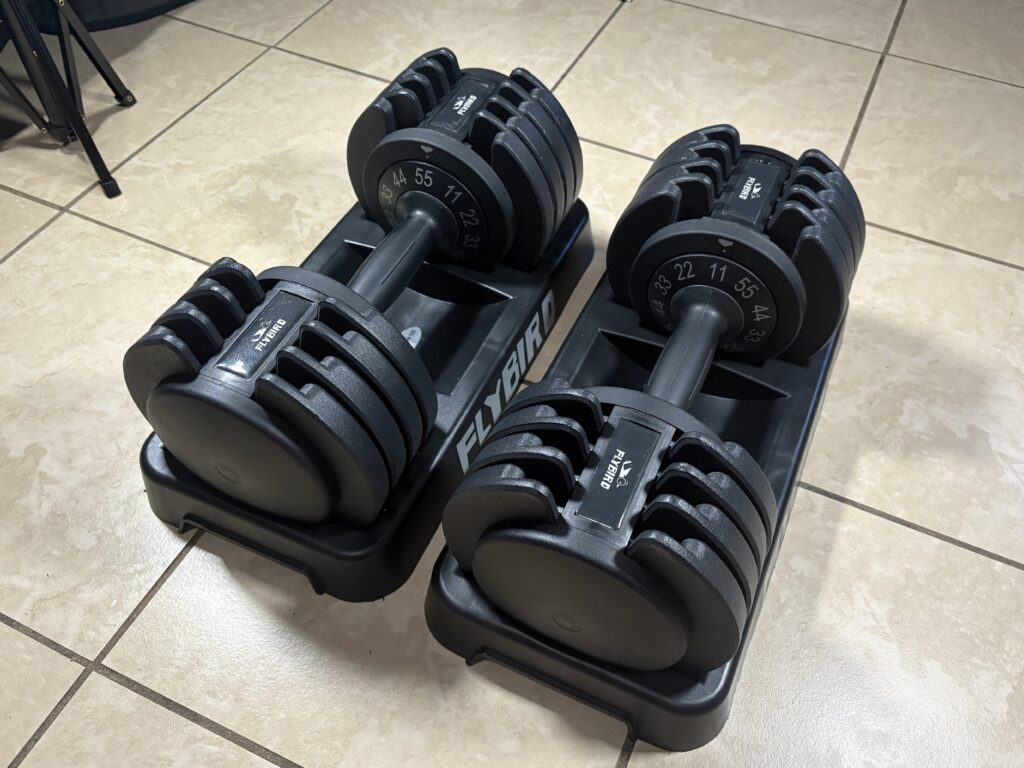
I’ve used the Flybird 11–55 lb adjustable dumbbells for years. Mine have been through hundreds of sessions worth of presses, rows, split squats, and RDLs. This review is the buyer-focused version of everything I wish someone had told me before I clicked “buy.”
Full Disclosure: I put gear through real-world testing whenever possible. To support this work, I use affiliate links. If you buy through my links, I may earn a commission at no extra cost to you. Thank you for supporting Applied Muscle.
As an Amazon Associate I earn from qualifying purchases.
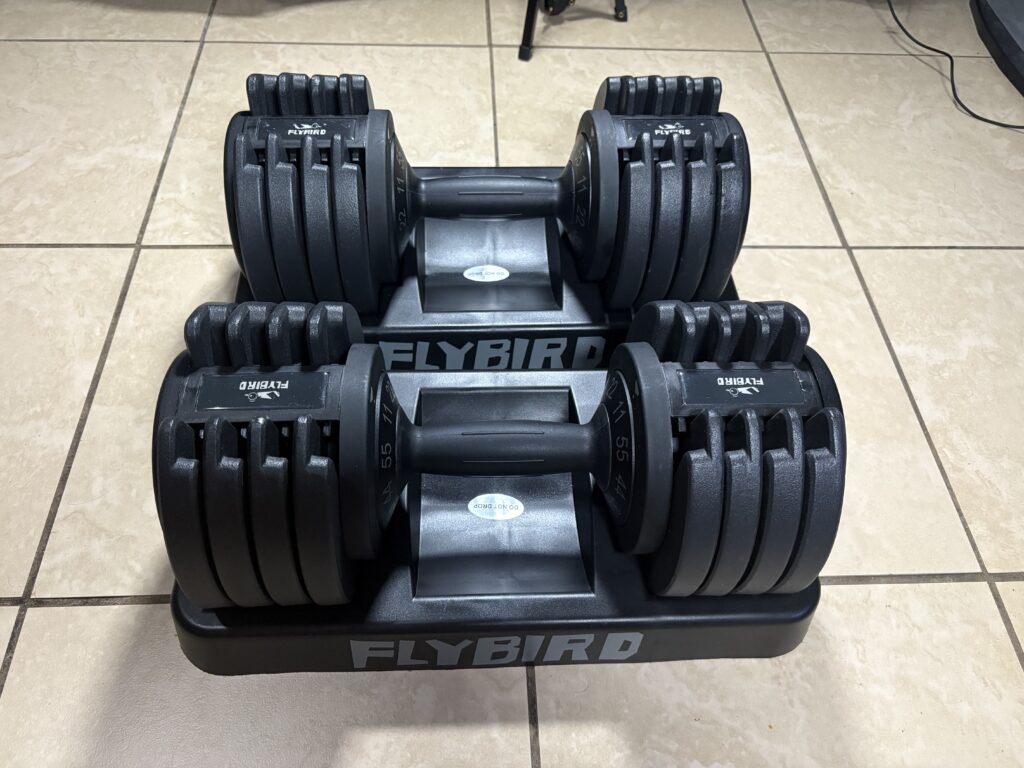
Model note (important): All hands-on testing (and any photos/video included) in this post are from my older Flybird 11–55 lb set (11/22/33/44/55). Most “check price” links today will point to the current Flybird 15–55 lb set (15/25/35/45/55), which I have not personally tested. Any comments about the current 15–55 version are based on published specs, not hands-on use.
Video walkthrough (if you prefer watching):
10-Second Decision
Buy if: you want fast changes, low clutter, 55 lb per dumbbell is enough, and you value ease-of-start.
Skip if: you need micro-loading (2.5–5 lb jumps), you’ll outgrow 55 quickly on big lifts, or you want all-metal/premium warranty vibes.
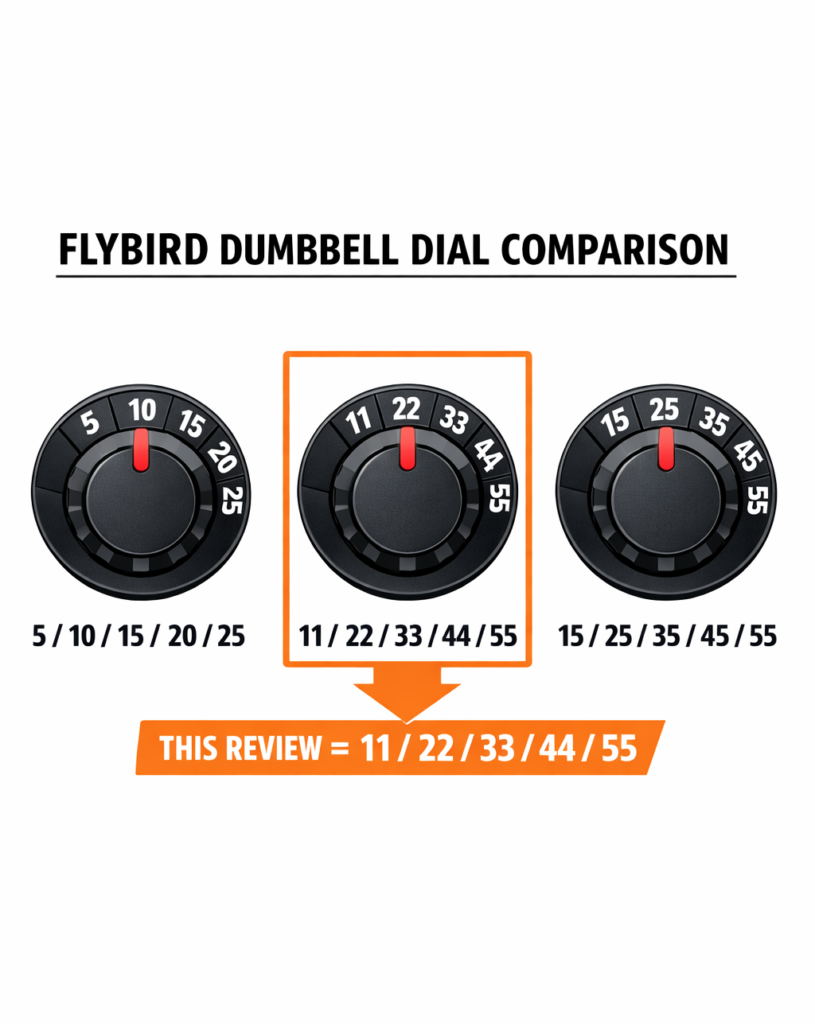
Critical note: Flybird has multiple versions. My hands-on review is for the older 11–55 ladder (11/22/33/44/55). The most common version sold new now is the 15–55 ladder (15/25/35/45/55).
Which Flybird are you looking at? (Let’s clarify this)
This review is specifically the Flybird set with this weight ladder per dumbbell: 11/22/ 33/44/ 55.
The current model most listings point to uses 15/25/35/45/55, and I have not tested that version hands-on. That is the newer version.
Other Flybird sets exist (like lighter ladders such as 5–25). Before you buy, confirm the dial numbers match the ladder you want.
Buying used? Verify the ladder printed on the handle/dial before you purchase.
The short verdict: why these are a “consistency tool”
These dumbbells don’t win because they’re perfect. They win because they make training at home easier to start and easier to repeat.
They cut down setup time and reduce decision fatigue. No plate hunting. No loading and unloading. No “what weights do I even have available right now?”
In real life, that means sets are smoother, 25-minute sessions feel realistic, and your floor stays clear because you’re not storing five pairs of dumbbells.
This is exactly the kind of barrier-lowering that Applied Muscle focuses on: making the next workout easy enough to start and predictable enough to repeat.
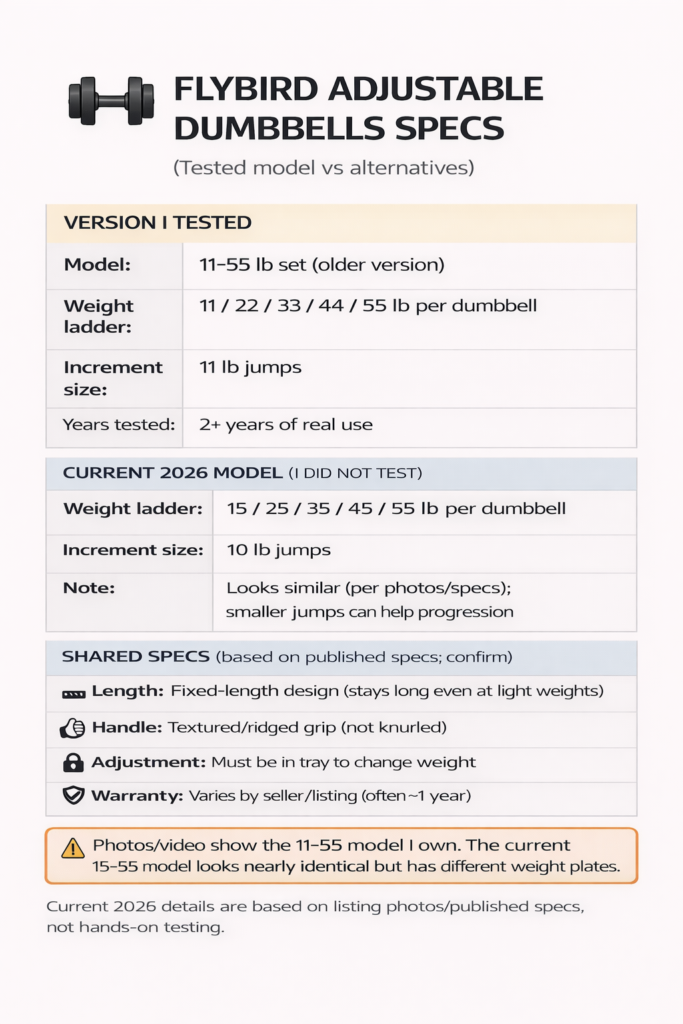
Specs box (what matters, interpreted)
The 6 things that annoy people (so you’re not surprised)
The first is the big one: 11-lb jumps can stall smaller lifts (on my older 11–55 set). (If you’re buying the current 15–55 version, the jumps are smaller, but still not micro-loading.) If you’re trying to slowly progress on curls or lateral raises, that’s a big leap.
Second, even at the lightest setting, the dumbbell stays full length. On some isolation angles it can feel clunky compared to a small fixed dumbbell.
Third, you can’t change weight mid-air. You must dock it in the cradle to adjust.
Fourth, the tray is plastic. It can feel cheaper than premium sets, even though it works perfectly fine day-to-day.
Fifth, the handle texture is ridge/texture, not sharp knurling. That’s personal preference.
Sixth, warranty and returns are not “buy-it-for-life” territory. Adjustable dumbbells are more like a tool with rules than a chunk of iron you can abuse forever.
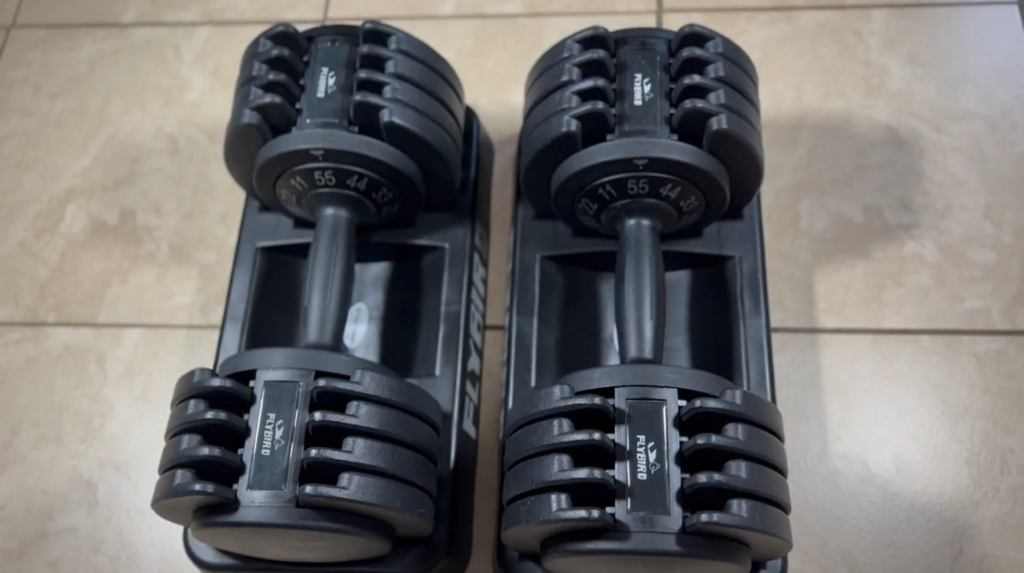
5-minute unboxing inspection (do this once)
Before your first workout, run this quick check:
- Confirm the dial locks cleanly at your listed settings (11/22/33/44/55 OR 15/25/35/45/55 depending on version)
- Select a weight and do a quick tug test on the handle before you start lifting
- Check plates sit aligned in the cradle and the dumbbell docks smoothly
- Listen for rattling that suggests something isn’t seated
- Put the tray on a stable surface or mat so it doesn’t flex or slide
If something feels off out of the box, handle it while your return window is still open.
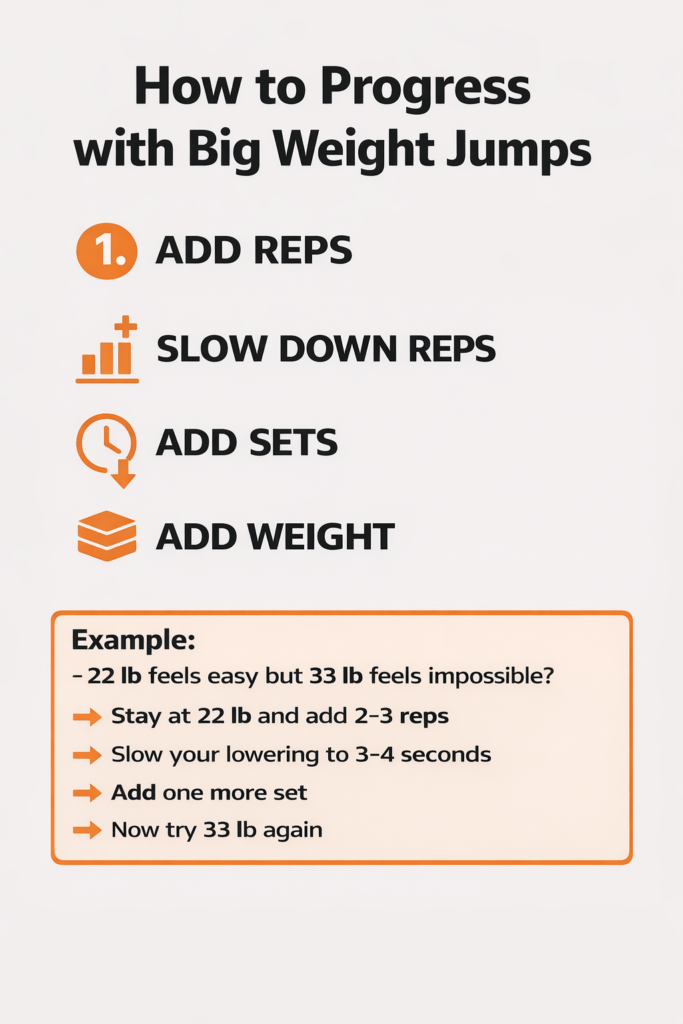
Progressing with 11-lb weight increments
With this ladder, you don’t force jumps. You earn them.
Increase reps first, then control tempo, then add volume, then progress weight. That’s how you make progress long-term with a 55 pound limit.
Quick example: if 22 to 33 is too big on presses, stay at 22. Add reps first. Then slow the lowering (controlled 2–4 seconds). Then add a set. Once 22 feels smooth, 33 stops feeling like a shock.
Moves that feel great vs moves that can feel awkward
In my experience, these feel great: presses (floor/incline/flat variations), rows, RDLs, split squats, shrugs.
These can feel awkward sometimes: lateral raises, strict curls, lying triceps extensions. That’s where the fixed length and big jumps show up. It’s a pretty big jump for most people to go from 22 pound lateral raises to 33 pounds.
You can still train them well. You just lean harder on reps, tempo, and clean execution.
Durability: what fails (and how to avoid it)
Think of these as a precision tool you can train hard with, not something you toss around like iron.
The most common problems usually come from a few predictable behaviors: rough impacts, trying to adjust outside the cradle, or repeatedly slamming them into the tray.
What care looks like in real life is simple. Set them down under control. Don’t drop them. Always adjust in the tray. Keep the tray stable.
Also, cosmetic wear is normal. Scuffs don’t matter. What matters is consistent locking and secure plate engagement.
Returns & warranty reality check
Expect a limited warranty (often around a year depending on seller/listing). Warranties in this category typically don’t cover damage from dropping or rough handling.
If something arrives misaligned or doesn’t lock cleanly, don’t troubleshoot for weeks. Document it and contact the seller/manufacturer immediately while the return window is easy.
BowFlex recall safety note (used buyers especially)
If you’re looking at used adjustable dumbbells, quick heads-up: some recalled BowFlex models were flagged because plates can dislodge during use.
So, if you’re considering BowFlex secondhand, verify the exact model and recall status before you purchase them.
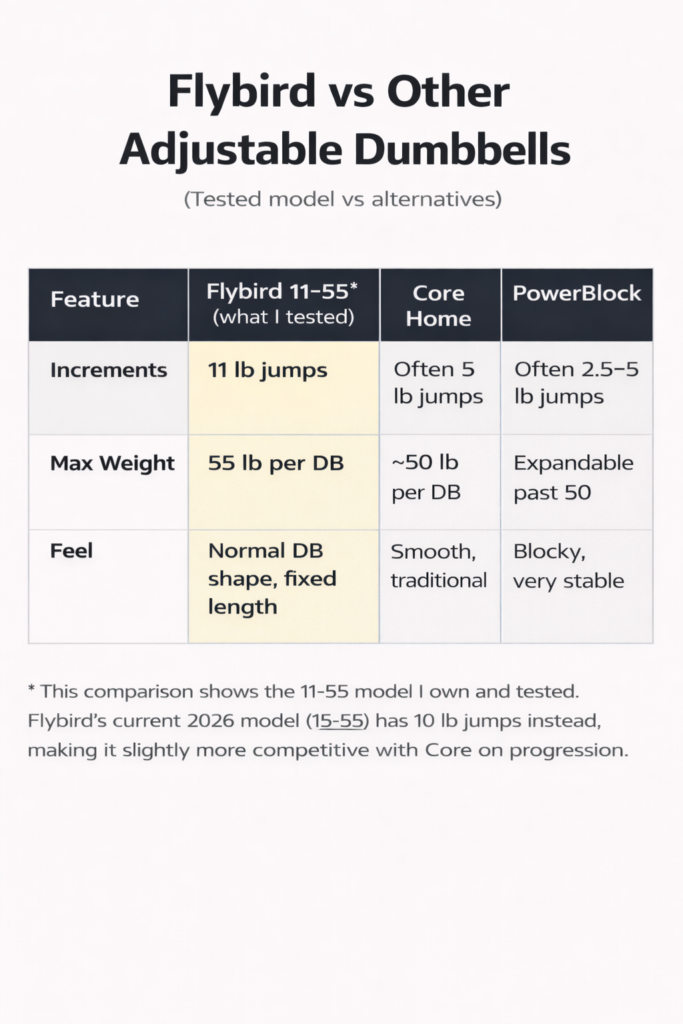
Quick comparison: Flybird vs Core vs PowerBlock
Should you buy Flybird?
Best fit for:
- Home lifters who want fast weight changes and low clutter
- People whose biggest barrier is starting (time, friction, decision fatigue)
- Anyone for whom 55 lb per dumbbell covers most training
Not a fit for:
- Lifters who need micro-loading for steady progression on small lifts
- People who will outgrow 55 quickly on big presses, rows, or legs
- Anyone chasing all-metal premium feel and long warranty comfort
One-sentence decision: My long-term testing is on the older Flybird 11–55 set, but many current purchase links point to the newer 15–55 version. If you want an affordable set that makes lifting at home easier to start and repeat, Flybird is a smart buy. Just go in with eyes open about the jump sizes and the 55-lb ceiling.
How to use them safely without overthinking it
Four rules and you’re good:
- Adjust only in the cradle
- Tug test plates occasionally
- Set them down under control
- Keep the tray stable (ideally on a mat)
Buying used? Do this before you pay.
This is where people either get a great deal or buy someone else’s headache.
- Confirm the ladder printed on the dial: 11/22/33/44/55
- Check the tray for cracks, warping, or wobble
- The dial should click smoothly at each setting
- Select one weight and do a tug test before handing over money
- Look for missing plates or mismatched parts (both dumbbells should match)
If any of that feels off, walk away. There will be another set.
Check current pricing
If this version matches your needs and you want the simplest path to getting started, you can check current pricing through my affiliate link. It supports the site and costs you nothing extra. Many current listings are for the newer 15–55 version, and my hands-on testing is from the older 11–55 set.
As an Amazon Associate I earn from qualifying purchases.
Use them tonight: 30-minute starter workout
If these arrive and sit in the corner for a week, nothing changes. Here’s a simple session you can run tonight to build momentum:
Warm up 5 minutes (light movement, joint circles, a few bodyweight squats). Then do a 20-minute circuit: RDL (hinge), floor press (press), one-arm row (pull), split squat (legs). Run 3-4 rounds, 8-12 reps per move, rest 30-60 seconds between exercises. Finish with 5 minutes of easy walking and light stretching.
The goal isn’t perfection. The goal is proving to yourself that training at home is now a low-barrier option you can repeat.
Next steps (to make this purchase actually pay off)
The dumbbells help. The consistency system is what makes them worth it.
If you’re still deciding whether adjustables are the right move, read this:
https://appliedmuscle.com/are-adjustable-dumbbells-worth-it
If you want a simple way to structure training once you have them, an upper/lower split or push/pull/legs are both clean options (and easier to stick to than most people think).
What I’d do if I had to rebuy today
If I’m staying under 55, I’d rebuy Flybird-style quick-adjust dumbbells for the same reason I’ve kept using them for years: ease of use leads to more training, and more training is the whole point. Practically, buying new today most likely means the current 15–55 version, which I haven’t tested hands-on.
If I’m getting stronger fast and I know I’ll outgrow 55, I’d go heavier or expandable.
If I wanted metal premium feel and extra durability, I’d shop for fixed dumbbells and accept the cost.
One clean closing thought
If you’re the right buyer, these are worth it for one reason: they make lifting at home feel doable on normal days.
Expect big jumps, a fixed-length feel, and a tray that works without feeling premium.
In return, you get fast changes, low clutter, and a setup that’s easier to start and easier to repeat. That’s the real value.