Are Adjustable Dumbbells Worth It? The Straight Answer for Home Lifters
You’re staring at a $300–$800 price tag thinking, “Am I really about to pay rent money for two fancy handles?” Yep… that feeling is normal.
Are adjustable dumbbells worth it? If your goal is building muscle and strength at home with the simplest setup possible, yes, for most people adjustable dumbbells are worth it. Because you’re not just buying weights… you’re buying a hassle-free way to train consistently.
But I’m not going to pretend they’re perfect. There are a handful of limitations that matter, and if you understand them now, you can buy the right set and train in a way that keeps progress moving for years.
And yes, I’ll show you how to use adjustable dumbbells in a way that feels smooth and satisfying, not clunky and interrupt-y.
For context: I’ve trained at home for years, and adjustable dumbbells have been one of the few pieces of gear that actually stayed in my routine instead of just collecting dust.
Disclosure: This post contains affiliate links. If you buy through my links, I may earn a commission at no extra cost to you.
As an Amazon Associate I earn from qualifying purchases.
Prefer video? I covered this entire topic on my YouTube channel, where I demonstrated how to use adjustable dumbbells and whether they are worth it:
The quick answer (and why people mess it up)
If your goal is to build strength and muscle at home with the simplest setup possible, adjustable dumbbells are usually worth it because they solve three problems at once: space, progression, and convenience.
Space is obvious. A full rack of fixed dumbbells clutters a room. Adjustable dumbbells give you a bunch of weight options in basically the footprint of one pair. Especially if you’re in an apartment or you’re sharing a room with your life, not just your gym equipment.
They also make progression easier. Muscle and strength don’t come from “good workouts.” They come from repeatable progression (aka ‘progressive overload’) over time. If you can’t gradually increase the challenge, you plateau and get frustrated and then you may find yourself “too busy” for training. Adjustable dumbbells make progression feel easy because the next weight is right there. No extra work loading plates and snapping collars on.
Convenience is what keeps you consistent. Less setup, less cleanup, less mental resistance. If you can start a workout in under two minutes, you train more often. Period.
If consistency is the real issue (it usually is), read this next: how to stay consistent with working out.
That said… adjustable dumbbells aren’t magic. They’re a tool with moving parts. Treat them like a tool with moving parts and they’re incredible. Treat them like cast iron gym dumbbells and you can break them, annoy yourself, or both.
How to decide whether they are for you
Let’s make this easy, because I know you’re trying to decide, not write a dissertation.
Buy adjustable dumbbells if you’re this person
You should strongly consider them if most of these are true:
- You want one purchase that can handle the majority of your strength training for the next 1–3 years.
- You’re short on space, or you just hate clutter, and a full dumbbell rack feels like chaos.
- You like the idea of progressing week to week without buying more equipment every time you get stronger.
- You’ll train at home 2–4 days per week, even if sessions are short (20–45 minutes).
- You’re okay setting weights down with control instead of dropping them like you’re in a CrossFit highlight reel.
If that’s you, adjustable dumbbells are not a luxury. They’re a really practical “future-proof” investment.
Skip adjustable dumbbells if you’re this person
You probably shouldn’t buy them (at least not as your main tool) if most of these are true:
- You know you’ll be rough with them: dropping, slamming, tossing after sets.
- You already need very heavy dumbbells for your main lifts (think 80–100+ lb per hand for pressing/rows) and you don’t want to pay for expandable systems.
- Your training style relies on super fast drop sets and constant weight changes, and you’ll get annoyed by docking/selecting.
- You can comfortably store a decent range of fixed dumbbells already and the space savings doesn’t matter.
The “if you’re on the fence” tie-breaker
Ask yourself this: will these make it more likely you actually train?
If adjustable dumbbells reduce hassle enough that you’ll lift more often, they’re worth it. If you’re buying them as a fantasy version of yourself… don’t.
Can you make real progress with just dumbbells?
Yes. You can build a serious amount of muscle with dumbbells alone.
Your muscles don’t know if a load comes from a barbell, a dumbbell, a machine, or a backpack full of books. They know tension, effort, and progression.
Research backs this up too. Hypertrophy (muscle growth) can occur across a wide range of loads as long as you train hard and get close to failure. Heavier loads tend to be more time-efficient for strength, but you can absolutely grow with moderate loads when you push sets hard. (1)
So why do people still doubt it? Because dumbbells reveal your weak links. They force control, stability, and honest effort. That’s not a limitation. It’s a feature. They challenge your body to use extra muscle in order to stabilize the weight. In that sense, they can be incredibly effective for growth.
Now for the caveat that keeps this honest: most adjustable dumbbells top out somewhere between 50–80 pounds per hand unless you buy expandable systems or go plate-loaded. If you’re already strong, some movements will eventually feel capped.
The good news is this: you can work around that cap in a way that still builds muscle and strength. You don’t have to “graduate” to a barbell to make progress. You just have to get a little smarter with exercise choices and how you progress.
How do adjustable dumbbells work?
This is worth understanding because it connects directly to safety and durability.
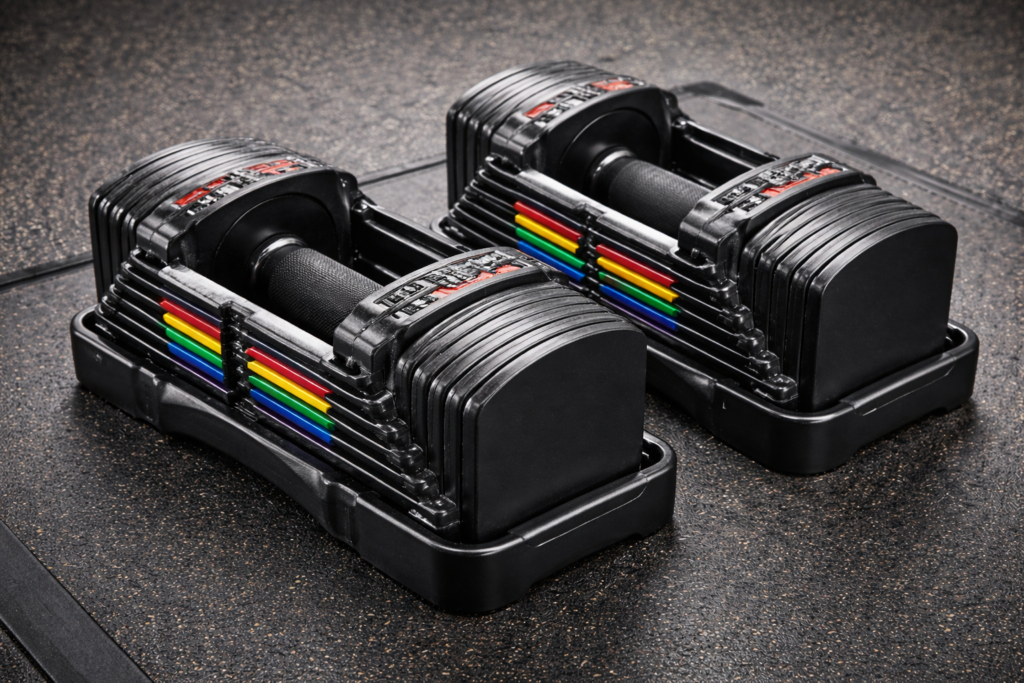
Most adjustable dumbbells work by letting you “select” which plates come with you when you lift the handle. The rest of the plates stay in a cradle or base.
There are a few common systems:
Some use a dial or twist mechanism. You dock the dumbbell in its cradle, turn a dial to the weight you want, and internal latches grab the correct plates. It’s fast and convenient. It also means the locking mechanism matters a lot.
Here I show how the dial mechanism works on my older Flybird set (11–55 model shown):
Some use a pin or rail system, where you slide a selector pin into the desired slot to change load. Usually very secure, usually quick.
Watch Discover New Tech demonstrate the pin-system using the PowerBlock adjustable dumbbells:
Some are plate-loaded quick-lock styles where you manually add plates, but in a cleaner, faster way than old-school spinlocks. These can be extremely durable and expandable, but they’re slower to adjust mid-workout.
Watch IronmasterPro demonstrate the plate-loaded quick-lock style using the Ironmaster adjustable dumbbells:
None of these are inherently “better.” It depends on what you value: speed, durability, expandability, or a more normal-dumbbell feel.
Are adjustable dumbbells safe?
Generally, yes, especially if you buy reputable sets and use them correctly. But you’re smart to ask, because “moving parts + heavy thing over your face” deserves some consideration.
Here’s what usually causes issues:
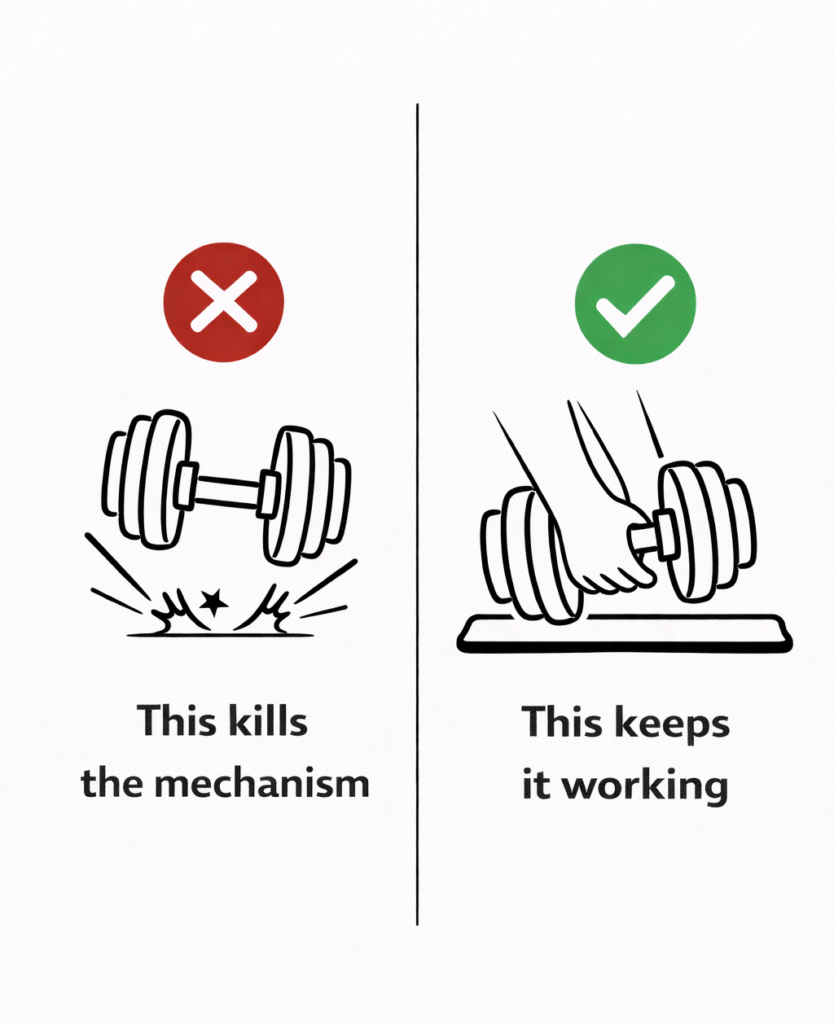
Dropping or slamming them. Adjustable dumbbells are not designed to be thrown down repeatedly. Even when they’re well-built, impact can damage the mechanism or knock things out of alignment. That’s how you turn a great purchase into a pile of wasted money.
Partial engagement. Most “plate fell off” stories come from the dumbbell not being fully seated, or the selector not being fully engaged.
And yes, plate dislodging can happen. It’s fairly rare, but it’s real enough that there have been major recalls in the space due to plates dislodging during use. (2)
So let’s make this practical.
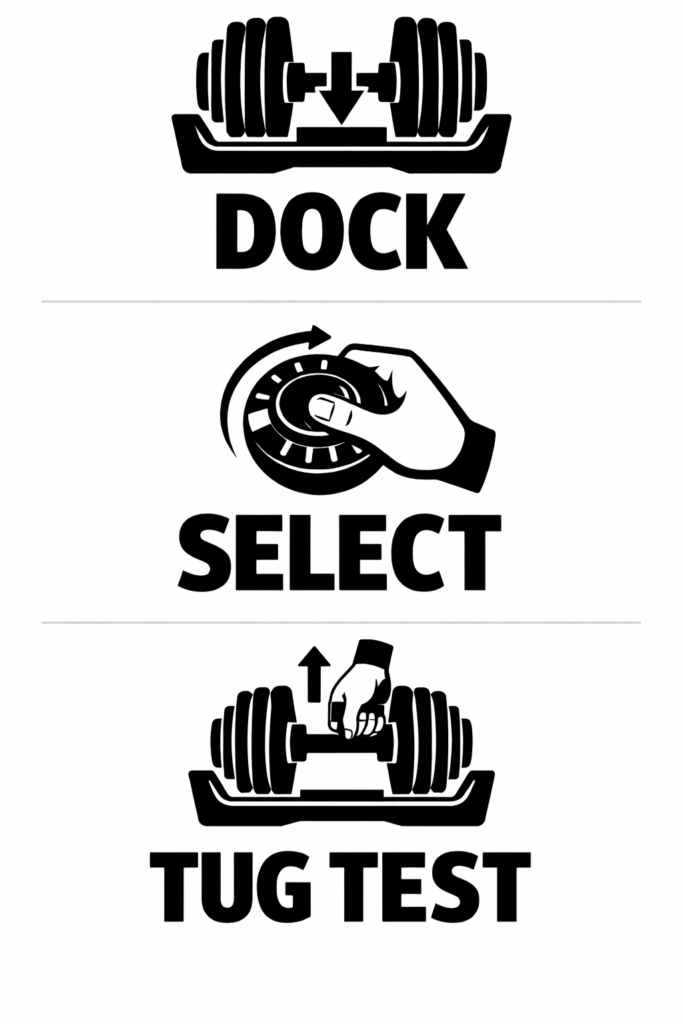
If you want adjustable dumbbells to be safe, do this every single time:
Take two seconds to dock them cleanly, select the weight, then give the plates a quick “tug test” before your first rep. That’s it. That tiny habit is the difference between “these are totally fine” and “I don’t trust this thing.”
The first time a plate slips (even if it slips at pickup), you suddenly become the guy who checks everything twice.
And if you train at home, here’s an underrated safety move: lift on a rubber mat or a rug with grip. Not for the dumbbells. For you. Slipping while holding heavy dumbbells is a way bigger risk than the mechanism itself.
The real reason adjustable dumbbells are “worth it”: consistency
I’m going to say something mildly annoying but very true: the best training plan is the one you actually repeat.
That’s exactly why the dose matters more than the “optimal program.” If you want the simple framework I use for that, it’s here: Minimum Effective Dose vs. Maximum Sustainable Dose strength training.
Adjustable dumbbells win because they increase the ease of working out. They make starting easier, and starting is the hardest part.
Most people don’t quit because training “doesn’t work.” They quit because their setup feels like a hassle. Plates everywhere. No room. Switching weights takes forever. You get interrupted, lose momentum, and the workout falls apart.
And sometimes you just don’t want to drive all the way to the gym and deal with the crowds. Having an easily adjustable set of dumbbells is a nice solution.
Adjustable dumbbells keep your workout moving. And momentum matters. It matters for intensity, and it matters for keeping your head in the game.
How to use adjustable dumbbells so workouts feel smooth (not fiddly)
Here’s the trick: most people program adjustable dumbbells like they’re in a commercial gym. Too many exercises. Too many weight changes. Too much bouncing around.
Instead, treat them like a minimalist tool that rewards focus.
Pick a few big movements you can progress with for months. Then keep the weight changes simple and predictable. If you can do your whole workout with only a few weight selections, it’s nice and simple.
You can still train hard. You’re just not constantly interrupting yourself.
And if you want one word that makes dumbbells work for muscle growth, it’s this: control.
Dumbbells reward clean reps. Slow lowers. Pauses. Full range of motion. That’s how you make “only 55 pounds” feel like plenty.
If you’re wondering what training looks like with adjustables, it’s usually something like: a push, a pull, and a leg movement 3 days per week, with one or two “smaller” moves after. Nothing fancy. The whole point is that you can finish in 30–45 minutes and still be growing and getting stronger.
The limits of adjustable dumbbells (and the workarounds that actually work)
Let’s talk about the real ceilings, because pretending they don’t exist is how you end up disappointed.
The first limit: legs will outgrow your dumbbells
Your legs are strong. Even if you’re new, your legs adapt fast.
If your adjustable dumbbells top out at 50–60 per hand, heavy bilateral squats might eventually feel limited. That’s where dumbbell training gets clever.
You lean into unilateral work: split squats, Bulgarian split squats, lunges, single-leg RDLs. These are not “light alternatives.” They are brutal when done well, and they scale beautifully.
If you’ve never taken Bulgarian split squats seriously, you’re about to learn something about suffering… and growth.
The second limit: very heavy pressing and hinging
If you’re already strong, dumbbell bench and dumbbell RDLs can eventually hit a point where you want more load.
Workarounds:
- slow eccentric reps (3 seconds on lowering portion)
- pauses at the bottom
- higher reps taken close to failure
- extra sets
- one-arm variations where appropriate
This isn’t “making it complicated.” It’s just using intensity tools that lifters have used forever.
The third limit: you can’t abuse them
If you love dropping weights, adjustable dumbbells will not love you back.
You don’t have to baby them. Just set them down with control if you want them to last.
The best adjustable dumbbells: what actually matters when choosing
When people ask about the best adjustable dumbbells, they’re usually trying to avoid two future problems: buying something that doesn’t work well, or buying something that breaks.
So here’s the filter I’d use if we were talking one-on-one.
First, choose a weight range that matches where you are and where you’ll be in a year. If you’re a beginner or intermediate lifter, a set that goes to 50–60 per hand is enough to make impressive progress for a long time.
Second, decide what you value most: speed of adjustments, expandable max weight, or “normal dumbbell” feel. Some systems are lightning fast but feel bulky. Some feel amazing but change slower.
Third, don’t get seduced by sketchy cheap knockoffs. With fixed dumbbells, cheap usually still works because it’s just metal. With adjustable dumbbells, cheap can mean sloppy tolerances, plastic parts where you want steel, and mechanisms that wear out fast. That’s the type of purchase that turns into a regret.
Disclosure (paid link): The FLYBIRD link below is an Amazon affiliate link.
Model note: My hands-on set is the older Flybird 11–55 version with 11/22/33/44/55 settings. Many current listings are the 15–55 version with 15/25/35/45/55 settings, which I have not personally tested. (Confirm the ladder shown on the listing before buying.)
My recommendation: Flybird adjustable dumbbells (11-55 lb pair) and who they’re for
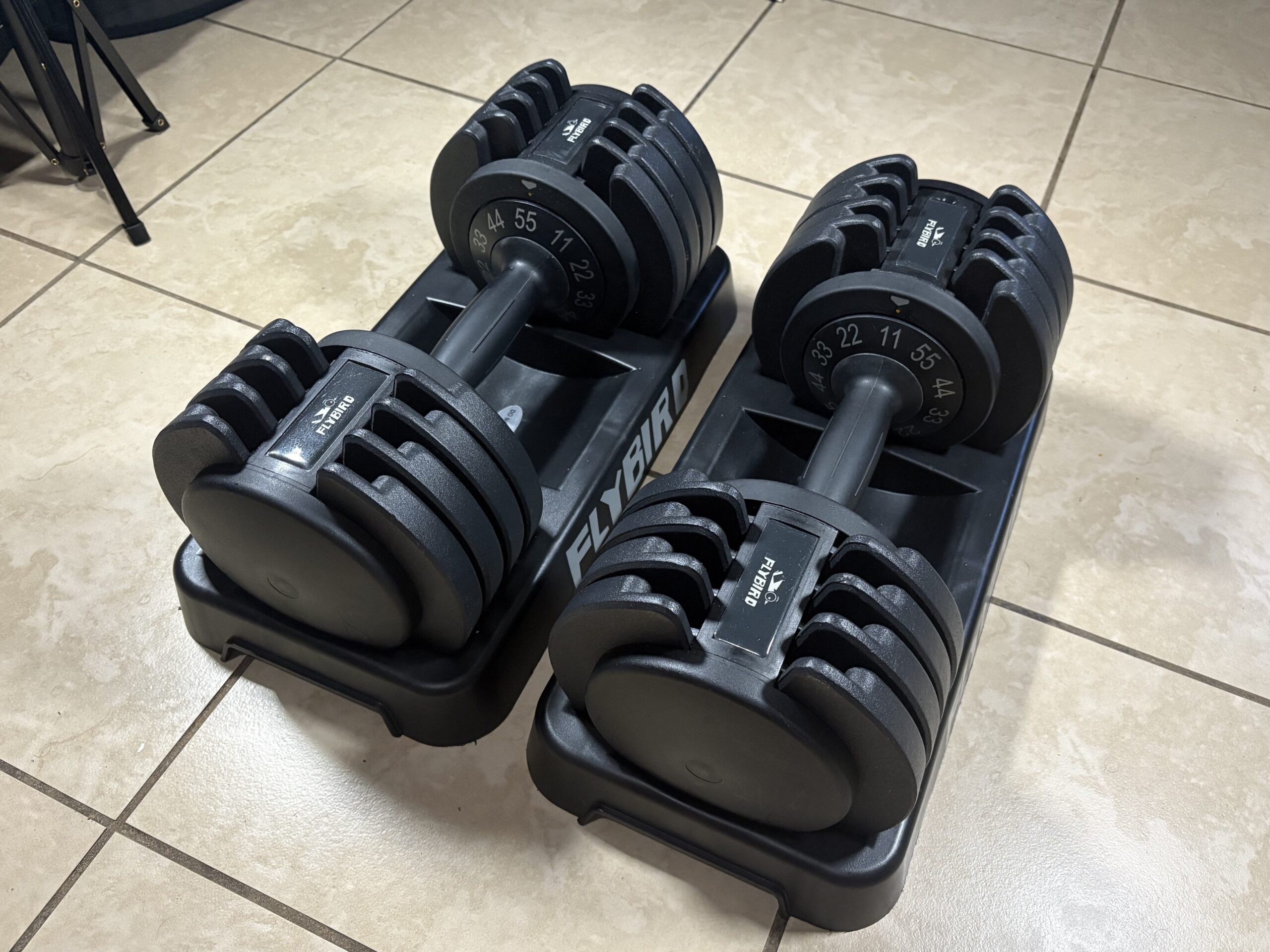
Quick clarification: Everything I describe from personal use below is from my older 11–55 Flybird set (11/22/33/44/55). If you buy new today, you will likely be looking at Flybird’s current 15–55 set (15/25/35/45/55), which I have not tested hands-on.
I’ve used the 55-pound Flybird adjustable dumbbells for several years, consistently. Not as a novelty. As one of the core pieces in my home gym routine. And overall, they’ve been a genuinely useful piece of equipment.
What they’re like in real training
The Flybirds adjust in a simple weight sequence: 11, 22, 33, 44, and 55 pounds (that ladder is on my older 11–55 set; many current listings show 15/25/35/45/55.). You set the dumbbell into the tray, twist the handle, listen/feel for the click, then lift.
The adjustment process is super fast. Once you’re used to them, changing weight is basically a 3-second thing. That might not sound like a big deal, but it changes how likely you are to actually do your accessories after the main lift. When changes are quick, you keep moving. When changes feel annoying, you start negotiating with yourself.
In terms of exercises, 55s are plenty for a lot of upper body work for most people: shoulder press, incline press, rows, curls, lateral raises, triceps work. They’re also great for single-leg work where the effective challenge gets very high without needing massive absolute load.
The shape matters more than people think
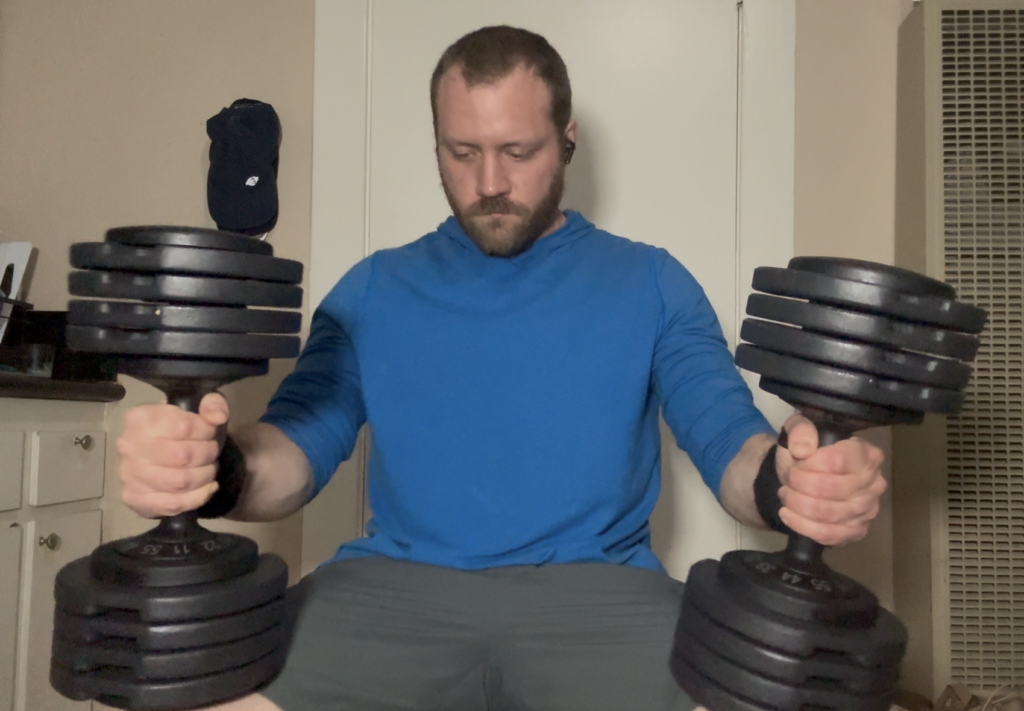
One reason I like these is they feel more like a traditional dumbbell. They’re not that boxy “cage” shape some adjustables have, and that makes a difference in comfort and movement, especially for pressing and rowing.
One small thing: because of the way the plates sit, you want to keep both dumbbells oriented the same way in your hands so the weight distribution feels consistent. It’s not hard, just something you learn after a session or two.
The honest downside (and what happened in real life)
My main complaint is this: occasionally, when you lift the dumbbell out of the tray, an outer plate can slip off. In my experience, when it happens, it happens right at pickup, not mid-rep. Still, it’s annoying. And it’s the type of thing that makes you do the tug-test automatically.
Based on current listing photos and published specs, it appears Flybird may have revised some details on newer versions, but I have not tested the current revision hands-on. The updated design looks like it reduces that plate slip issue. Regardless, the core point stays the same: treat adjustable dumbbells like adjustable dumbbells. Dock them cleanly. Confirm the lock. Then lift.
A smaller annoyance: every once in a while they can stick in the tray for a second. Usually it’s a quick reseat and they pop free. Not a deal-breaker. Just reality.
Who should buy them
If you’re a beginner to intermediate lifter building a minimalist home setup, the Flybirds make a lot of sense. They’re especially good if you want a set that feels close to a “normal dumbbell,” adjusts quickly, and doesn’t cost premium-tier money.
They’re also great as a second option for someone who mostly trains in a gym but needs a reliable home fallback for busy weeks.
As an Amazon Associate I earn from qualifying purchases.
Note: The current listing appears to be a revised version of my older set (based on product photos/specs). I can’t confirm that everything is identical internally because I haven’t tested the current revision.
Want to see the Flybirds in action? Here’s my full video review (older 11–55 model shown):
If Flybird doesn’t feel like the right fit, Garage Gym Reviews keeps a solid roundup of other adjustable dumbbell options worth checking out. (3)
So, are adjustable dumbbells worth it? Here’s the answer I’d tell a friend
If you want to build muscle and strength at home with the simplest setup possible, adjustable dumbbells are one of the best purchases you can make.
They’re not perfect. They’re not indestructible. And they’re not the ideal tool for someone who wants to drop weights, lift ultra-heavy, or run super complex drop set workouts.
But for the normal person who wants to train hard, get stronger, look better, and not turn their home into a storage unit full of iron… they’re a legit cheat code.
Here’s the vibe I want you to leave with:
You can absolutely make real progress with just dumbbells. You don’t need a rack to earn results. You need a setup you’ll repeat, a plan you can stick to, and a way to progressively challenge your body without turning every workout into a production.
Adjustable dumbbells do that better than almost anything else.
Next step (5 minutes)
Decide what you want most:
- fastest weight changes
- most “normal dumbbell” feel
- expandability to heavier weights later
Then choose a reputable set that matches that goal. Put them somewhere easy to access. Pick three training days. Start.
And if gyms make you anxious and that’s part of why you’re building at home, then read this piece I wrote on overcoming gym anxiety.
References
- Schoenfeld, B. J., Grgic, J., Ogborn, D., & Krieger, J. W. (2017). Strength and hypertrophy adaptations between low- versus high-load resistance training: A systematic review and meta-analysis. Journal of Strength and Conditioning Research.
- U.S. Consumer Product Safety Commission. (2025, June 5). Johnson Health Tech Trading recalls BowFlex adjustable dumbbells due to impact hazard (including 3.7 million sold by Nautilus Inc.).
- Garage Gym Reviews. (n.d.). Best adjustable dumbbells (tested by fitness experts).